



Aroma, smoke, lemon, olive oil…
FIRE – OIL – HERBS

What we focus on in July
A Mediterranean grill that protects flavour and nutrients
Early July brings long evenings, dinners under the open sky, and a craving for simple dishes where nothing useful gets lost in the cooking. Mediterranean cuisine does this like few others — olive oil, fresh herbs, seasonal vegetables, fish, a piece of meat over hot embers. Sunshine on the plate.
That is why this July, the Smart Choice programme focuses on Mediterranean grilling — how to fire up the grill so it works for flavour and nutrition, not against them.

Why the Mediterranean
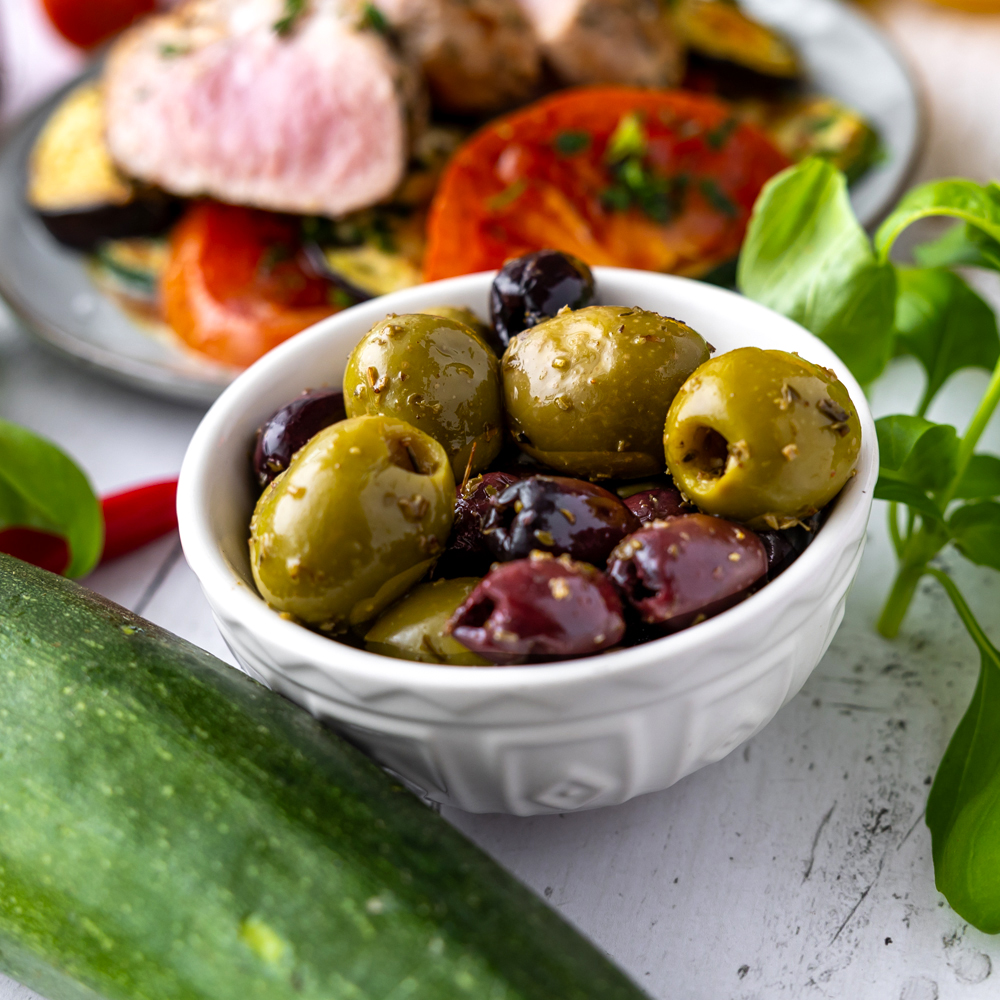
The Mediterranean diet is probably the most scientifically validated way of eating we know of. The evidence is consistent: it extends life expectancy and protects the heart. It isn’t really a “diet” in the strict sense — it’s an approach to food. It rests on three pillars: extra virgin olive oil (a source of monounsaturated fats and polyphenols), fresh vegetables and herbs (fibre, vitamins, antioxidants), and fish instead of red meat (omega-3 fatty acids).
Grilling fits naturally into this approach — when done thoughtfully. And this is where honesty matters.
What we actually know about grilling
Grilling isn’t automatically “healthy” just because it avoids the frying pan. At very high temperatures and in direct contact with flame, the surface of meat can develop heterocyclic amines (HCAs) and polycyclic aromatic hydrocarbons (PAHs) — compounds the International Agency for Research on Cancer classifies as probably carcinogenic to humans.
The good news: the traditional Mediterranean approach to grilling — marinades of olive oil, lemon, herbs and garlic; lower temperatures; less direct flame; fish more often than fatty red meat — significantly reduces these risks. Studies show that marinades rich in rosemary, thyme and oregano can reduce HCA formation by 70–90%. Herbs in a marinade are not just aromatics. They are part of the technique.
Mindful grilling in five rules
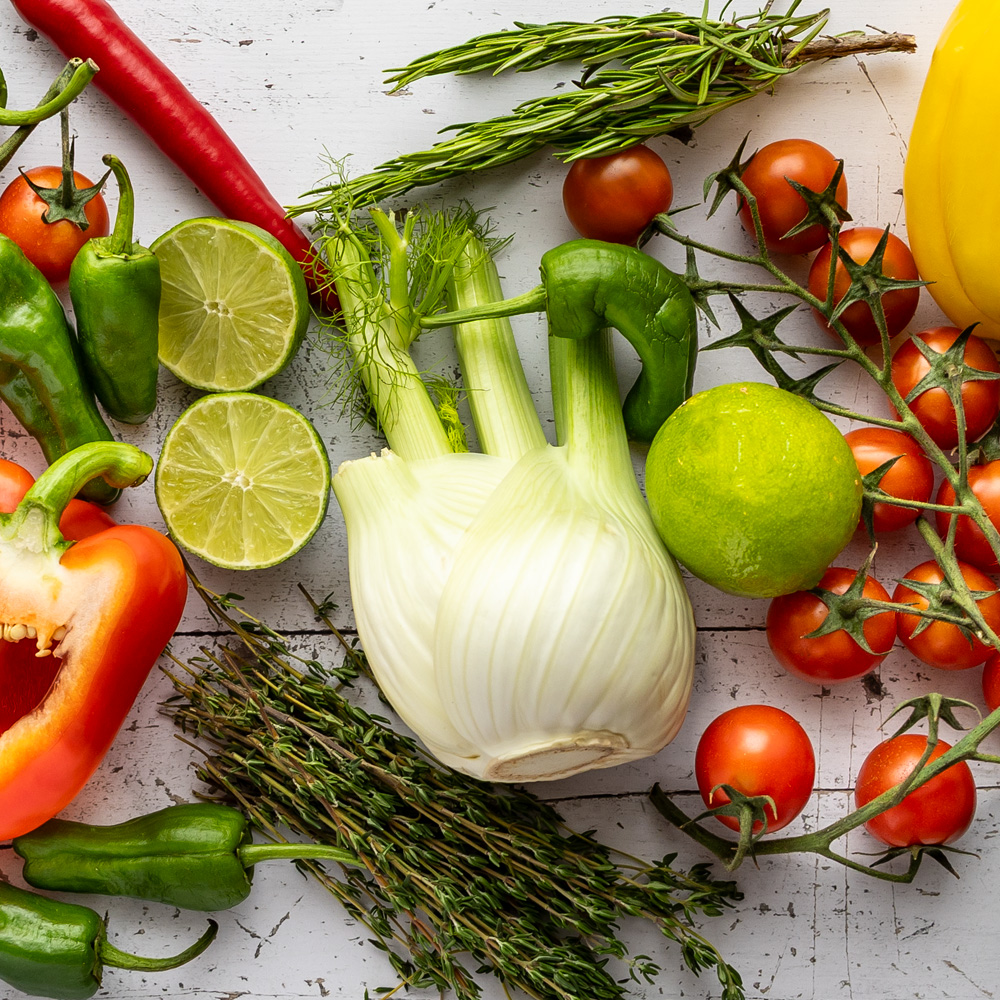
- Marinade as protection, not just decoration. Olive oil, lemon juice, garlic, rosemary, thyme, oregano — a minimum of 30 minutes, ideally 2 hours. Beyond flavour, it shields the surface of the meat from HCA formation when it meets the heat.
- Two zones instead of direct flame. The classic “throw it straight on the grate so it sizzles” is the worst choice for both health and juiciness. A two-zone grill is far better: a brief contact with the flame for the crust, then finish in indirect heat. Larger cuts go further from the flame; smaller pieces can sit closer.
- Watch the dripping fat. Fat that falls into the flame creates smoke laden with PAHs, which then settles back onto the food. Trim off excess fatty edges, place a foil tray under the grate, or reach for classic Mediterranean methods like à la plancha (a hot iron plate over the embers) or en papillote (wrapped in parchment paper) — where the food never meets an open flame at all.
- Herbs and lemon at the end. Fresh rosemary, thyme, basil or parsley release their aroma best just before serving. Add citrus only after taking the food off the grill — vitamin C doesn’t handle heat well.
- Let it rest off the grill. Meat 5 minutes, larger cuts 10. The juices redistribute evenly and every bite turns out tender.
What to expect on the plate
Meat that’s neither dry nor charred. Vegetables with grill marks but no carbonised edges. The scent of rosemary and olive oil instead of thick smoke. And concrete benefits on top:
- Olive oil polyphenols (oleocanthal, oleuropein, hydroxytyrosol) — anti-inflammatory action and cardiovascular support.
- Carnosic and rosmarinic acid from herbs — powerful antioxidants that also suppress HCA formation during grilling.
- Omega-3 from sea fish (sardines, mackerel, anchovies) — protect the heart and brain, reduce systemic inflammation.
- Fibre and potassium from vegetables — help maintain healthy blood pressure.
And one thing that can’t be measured in grams: slower meals, food shared at the table, less hurry. The Mediterranean is largely about how we eat — not just what.
Sounds like a smart choice for hot days, doesn’t it? 🙂
In our restaurants this July, we’re grilling exactly like this. Come and taste a piece of summer.
What are we cooking?
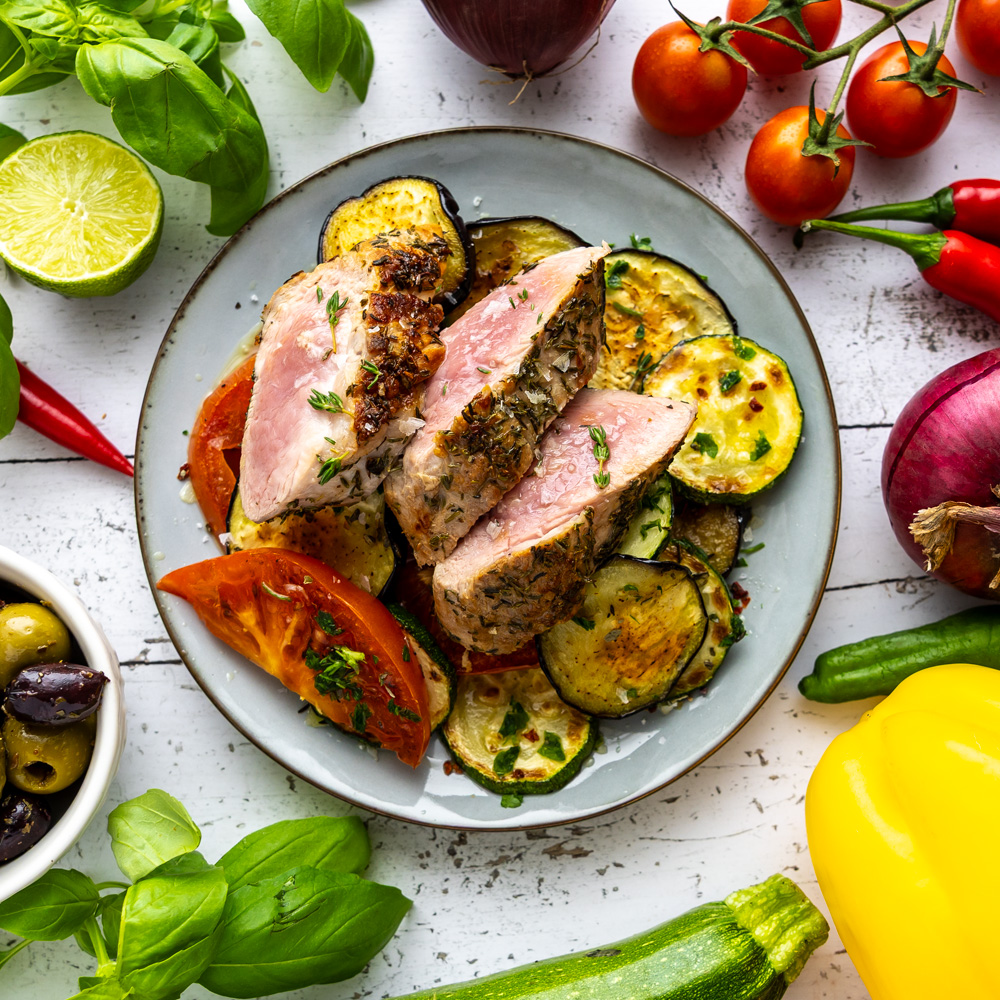
Pork tenderloin with grilled vegetables
4 servings
Ingredients:
- 600 g pork tenderloin
- 2 small courgettes
- 2 aubergines
- 4 tomatoes
- 2 tbsp avocado oil
- 1 tsp dried thyme
- salt
- freshly ground black pepper
Method:
- Trim the pork tenderloin, season with salt and pepper. Sear in a hot pan on all sides until golden. Sprinkle with thyme and finish in an oven preheated to 180 °C for approximately 10–15 minutes depending on thickness. Leave to rest for a few minutes before slicing.
- Cut the courgettes and aubergines into thicker slices, halve the tomatoes. Brush the vegetables lightly with oil, season with salt and pepper.
- Grill the vegetables on a griddle pan or outdoor grill until tender and marked with grill lines.
- Divide the grilled vegetables among plates. Slice the pork tenderloin and arrange on top.
- Serve immediately, scattered with fresh herbs if you like.
Tip: Great with roasted potatoes, a light salad, or a yoghurt herb dip.
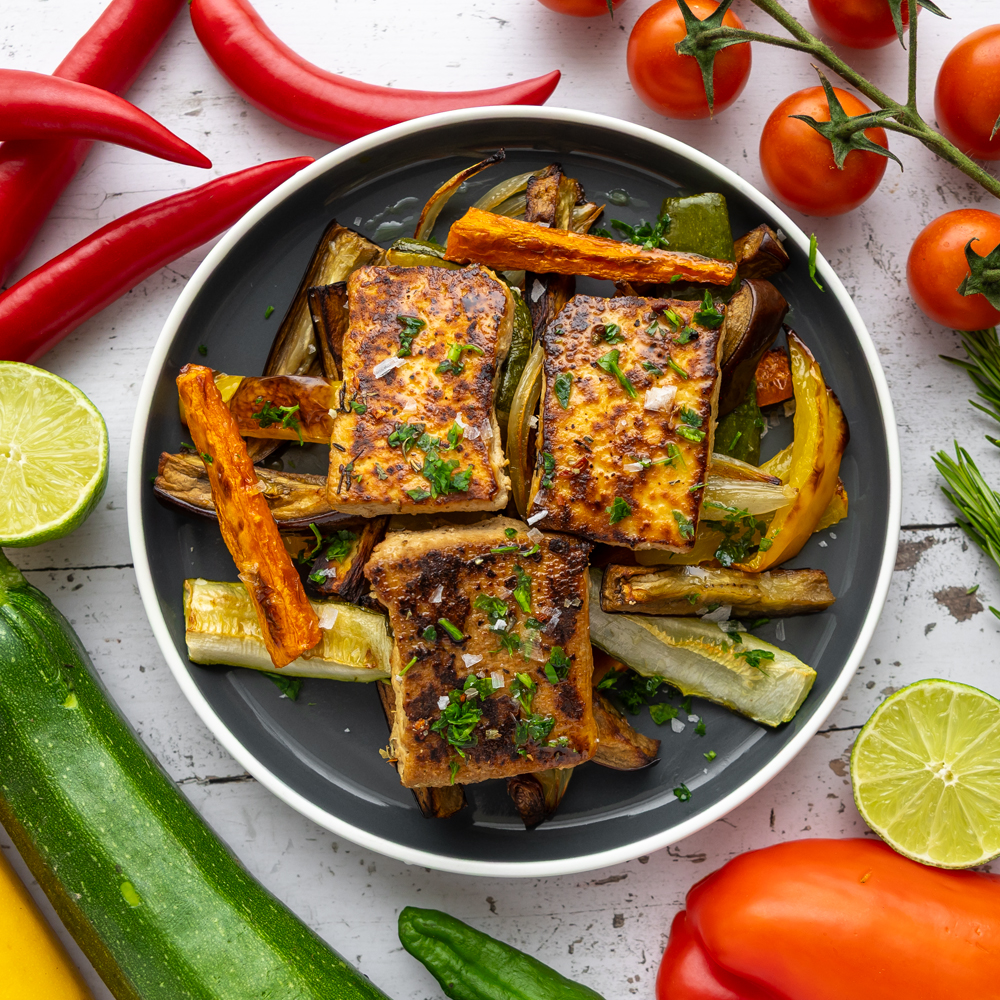
Grilled vegetables with tofu
4 servings
Ingredients:
- 320 g natural tofu
- 320 g celeriac
- 400 g carrots
- 240 g courgette
- 240 g aubergine
- 240 g red pepper
- 1 large onion
- 2 tbsp avocado oil
- 1 tsp dried thyme
- a handful of fresh parsley
- salt
Method:
- Peel and trim the celeriac, carrots, courgette, aubergine and pepper; cut everything into equal-sized batons or larger chunks. Slice the onion into half-moons.
- Toss the vegetables with half the oil, season lightly with salt and spread on a baking tray. Roast or grill at 220–230 °C for about 15–20 minutes until tender and lightly charred.
- Pat the tofu dry and cut into thicker slices or cubes. Brush with the remaining oil and sprinkle with thyme.
- Cook the tofu on a griddle pan, outdoor grill, or in the oven until golden, approximately 10–15 minutes.
- Divide the grilled vegetables among plates, add the tofu and scatter with chopped parsley.
Tip: Serve with a yoghurt herb dip or a slice of wholegrain bread.
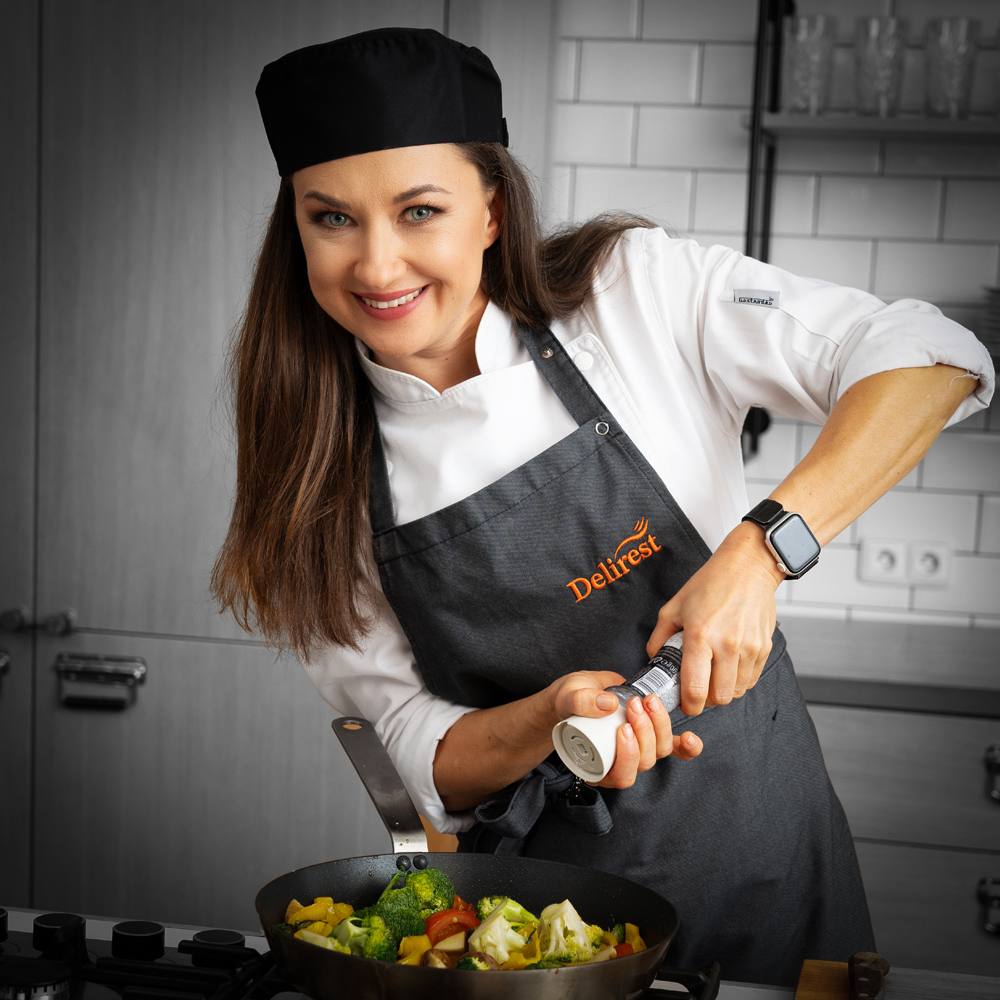
Recommended by Kristýna Ostratická, head chef at Delirest:
For more than 15 years she has been professionally dedicated to gastronomy and nutrition. She studied both fields and combines them perfectly. She has a wealth of beautiful experiences and demanding challenges behind her.
From food editor to personal coaching, appearing in a television cooking show with her own recipes, to introducing healthy dishes into corporate canteens along with preparing them for hundreds of diners.